
Author: vegan
World Wildlife Fund Videos
- Nature Breaking #podcast clip: Nature's #Award #Show
 by World Wildlife Fund on March 10, 2026 at 6:52 pm
This awards season, it seems like everyone is walking a red carpet and striking a pose. So this week we decided to help nature get in on the fun. Check out today’s podcast episode featuring the first-ever Nature Breaking Awards — our in-house awards show honoring excellence in the fields of wildlife and ecosystems. From bees to zebras, from rainforests to the Arctic, stay tuned for a celebration of all the things that make our planet one-of-a-kind.
- Nature’s Awards Show: Celebrating Wildlife, Ecosystems, and Earth’s MVPs
 by World Wildlife Fund on March 10, 2026 at 6:30 pm
Right now we’re at the height of awards season, when artists across a variety of disciplines get awarded for the best achievements in their respective industries. In the spirit of that season, we decided to hand out some awards of our own this week. This episode features the first-ever Nature Breaking Awards. It’s just like your favorite awards show, but for conservation instead of music or movies. Co-hosts Seth Larson and Hayley Lawton will run through fun categories like “Best Ecosystem Soundtrack” and “Wildest Wardrobe,” discuss the nominees, and hand out some (largely arbitrary) awards. Because after all, we’re all winners when it comes to saving the planet. Links for More Info: Subscribe to WWF’s YouTube page: https://wwf.to/3OZhj6A. Find Nature Breaking on: Apple Podcasts: https://podcasts.apple.com/us/podcast/nature-breaking/id1636490602 Spotify: https://open.spotify.com/show/0Y6y4dMsqpFjDqQQQSBMcB Chapters: 0:00 Preview 0:19 Intro 1:33 Explaining the Nature Breaking Awards 3:05 Standout Support Species 5:03 Outstanding Wildlife Effects 6:38 Best Ecosystem Soundtrack 8:52 Wildest Wardrobe 10:08 Outstanding Ecosystem 11:37 Reactions to the winners 12:58 Outro #NatureAwards #WildlifeAwards #Conservation #Biodiversity #Ecosystems #WildlifeWonder #PlanetEarth #WWF #SustainableFuture #EnvironmentalEducation #ProtectNature #EarthsMVPs #WildlifeFacts
- #Sounds of the #Amazon #rainforest!
 by World Wildlife Fund on March 9, 2026 at 4:29 pm
Here are some facts about the Amazon you should know. 🌳It’s the world’s largest continuous rainforest and river system 🌳Home to about a tenth of Earth's known species 🌳And it contains 1.4 billion acres of dense forests
- #Baby #dugong sighting!
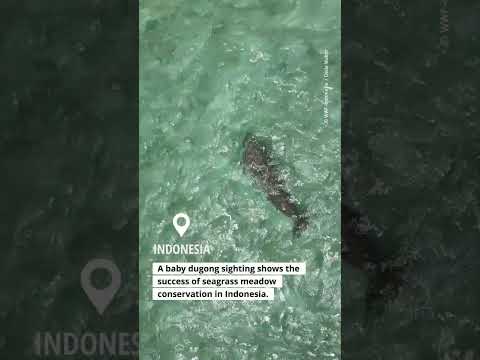 by World Wildlife Fund on February 26, 2026 at 5:34 pm
A rare wildlife sighting of a calf swimming alongside its parents in Indonesia’s central Alor archipelago. Fishers spotted the calf in the bay of Mali Beach last October. Its presence indicates the success of several decades of community-led conservation efforts in these waters to protect and expand seagrass meadows. Seagrass meadows are vital habitat and food sources for dugongs and other marine life.
- Nature Breaking #podcast clip: What is impact investing?
 by World Wildlife Fund on February 24, 2026 at 8:29 pm
What is “impact investing” and how can it help save our planet? Lots of companies are advancing innovative solutions for environmental challenges, but struggle to raise the capital needed to grow their business. Impact investing can help. Learn all about it in this week’s episode of Nature Breaking.
- Can “Impact Investing” Help Save the Planet?
 by World Wildlife Fund on February 24, 2026 at 7:30 pm
Finance has a critical role to play in achieving conservation goals. Simply put, saving an ecosystem, or a species, isn’t free. Those efforts require lots of scientific research and analysis, tools, infrastructure, and staff. WWF has been at the forefront of a variety of innovative ways to finance those efforts – from Project Finance for Permanence initiatives, to debt for nature swaps, and more. Today we’re going to talk about another approach that’s gaining steam: impact investing. Impact investing is all about making investments with the goal of advancing social or environmental outcomes – not about maximizing financial returns. Joining Nature Breaking today to explain how it works is Isabelle Foster, WWF’s Senior Impact Investing Specialist. Isabelle is part of WWF Impact, our impact investing venture. And she’s also a podcast host, having recently launched a limited-series show called Catalyzing Climate Conversations. Her new show is a partnership with the Aspen Institute’s Aspen Network of Development Entrepreneurs (ANDE). Stay tuned to hear from Isabelle about how impact investing works, why WWF is investing in companies like EatCloud—whose software platform is helping grocery stores and other businesses divert food from the landfill and instead support local communities—and how these investments advance conservation outcomes on the ground. Links for More Info: Isabelle Foster bio: https://www.worldwildlife.org/about/profiles/isabelle-foster/ WWF Impact: https://www.worldwildlife.org/our-work/impact-investing/ PODCAST: Catalyzing Climate Conversations: https://andeglobal.org/catalyzing-conversations-a-podcast-by-ande-wwf-impact/ CHAPTERS: 0:00 Preview 0:30 Intro 1:56 What is impact investing? 5:20 How can impact investing help the planet? 8:02 WWF’s approach to impact investing 13:34 Example of success: EatCloud 21:45 Podcast plug for Catalyzing Climate Conversations 27:39 Outro #ImpactInvesting #ClimateSolutions #SustainableFinance #FoodSystems #RegenerativeAgriculture #FoodWaste #Aquaculture #NatureBasedSolutions #ClimateInnovation #WWF
- Nature Breaking #podcast clip: Climate, Nature, & the Insurance Crisis
 by World Wildlife Fund on February 10, 2026 at 8:34 pm
Why is World Wildlife Fund concerned about property insurance? Because insurance markets are reaching a breaking point—and climate change and nature loss are two of the biggest forces behind it. Tune into this week’s episode of Nature Breaking to learn what a recent WWF report found about the growing “insurance protection gap,” and how investing in nature could help to close it.
- Climate Change & Nature Loss are Driving an Insurance Crisis
 by World Wildlife Fund on February 10, 2026 at 7:30 pm
Did you know that extreme weather disasters in the U.S. are now causing more than 20 billion‑dollar events every year, leaving a growing share of those losses uninsured? As climate change accelerates—and as ecosystems like wetlands and forests are destroyed and degraded—the insurance protection gap is widening, putting households, businesses, and entire communities at rising financial risk. In this episode of Nature Breaking, you’ll hear from David Kuhn, WWF’s Director for Adaptation and Resilience Partnerships and a contributor to a new WWF report on the insurance crisis. David explains what’s driving the surge in uninsured losses, why premiums are skyrocketing, and how climate‑driven disasters are undermining the stability of the US insurance system. He also breaks down how nature loss is stripping communities of their “first line of defense” against floods, storms, and heat—and why restoring ecosystems may be one of the most cost‑effective ways to strengthen resilience and shore up the insurance system. As David shares, there’s reason for hope in spite of these alarming trends. With smart policies, better risk modeling, and investments that treat nature as essential infrastructure, we can reduce damages, lower costs, and build a safer, more resilient future. David Kuhn bio: https://www.worldwildlife.org/about/profiles/david-kuhn/ REPORT: Tackling the Insurance Protection Gap: https://wwf.panda.org/discover/our_focus/climate_and_energy_practice/?14877466/Insurance-Protection-Gap-Policy-Brief Op-Ed: Nature is a powerful ally against fires and floods (LA Times): https://www.latimes.com/opinion/story/2026-02-04/nature-powerful-ally-fires-floods Chapters: 0:00 Teaser 0:31 Intro 1:56 Explaining the insurance protection gap 6:47 Insurance becoming an unsustainable business model 10:23 Practical impacts of insurance gap on consumers 15:23 Role of nature loss in the insurance crisis 19:16 How nature can help mitigate the insurance crisis 21:32 Recommendations for policymakers, insurers, companies, etc. 25:50 Reasons for hope 30:00 Outro
- #Winter tips from #wildlife
 by World Wildlife Fund on February 9, 2026 at 5:00 pm
The winter sports season has just begun, and for some species, this is when their snowy skills truly shine.
- Experiencing the sandhill crane migration in the Rio Grande Basin. #sandhillcranes #newmexico
 by World Wildlife Fund on January 23, 2026 at 6:09 pm
We recently asked WWF staff from across the organization to reflect on the work highlights that made 2025 meaningful. WWF’s Madalen Howard shares her experience on visiting the sandhill crane migration in the Rio Grande Basin and its importance to freshwater ecosystems.